Zibo Mi¹, Great Neck North High School
Student Research Essay
¹ Zibo Mi served as a Student Research Intern in the Summer Youth Program and is currently pursuing secondary education at Great Neck North High School. This essay was prepared as part of FedMSB-related student internship work in Summer 2025.
Abstract
Before working on digital payments and stablecoin-related projects, I usually thought of money as something people use, not something people have to trust. Cash, bank balances, Venmo payments, and stablecoins all seem to show value, but they do not earn trust in the same way.
This essay is my attempt to organize what I learned about how money has changed from physical cash to digital and programmable systems. I use a simple two-axis framework. One axis looks at the form of money, from tangible objects to digital and programmable media. The other axis looks at the source of trust, from government and bank-based trust to platform, community, and code-based trust.
I compare cash, bank deposits, e-money, stablecoins, central bank digital currencies, and cryptocurrencies. I also reflect on FedMSB’s 2025 discussion about redefining money for the digital age, which helped me think more clearly about settlement, governance, and user trust. My main conclusion is that digital money is not only a technology issue. For ordinary users, especially younger users, digital money also has to feel understandable, reliable, and safe enough to use.
Keywords: money, digital payments, stablecoins, trust, fintech, CBDCs, user experience
1. Introduction
Most students use digital payments without thinking much about what happens behind the screen. A friend pays another friend through Venmo. Someone taps Apple Pay at a store. A parent transfers money into a bank account. In each case, the payment feels simple because the interface is simple.
But the more I studied digital payments, the more I realized that simplicity can hide many layers of trust. A person using a payment app is not just trusting the app design. They are also trusting the bank connection, the company behind the app, the rules for reversing or settling transactions, and sometimes the government or regulatory system behind it.
My interest in this question grew during my FedMSB-related work on digital payments and stablecoin visual identity. At first, I was mostly focused on design: what symbols could communicate stability, trust, and dollar value? But while thinking about stablecoins, I began to realize that design is only one part of the issue. A financial product can look trustworthy, but users also need to know what backs it, who controls it, and what happens if something goes wrong.
This essay does not try to create a new theory of money. It is a student-level framework for organizing what I learned from readings, FedMSB-related work, and my own observations as someone who has lived and studied in both Singapore and New York. I focus on two questions:
- How has money moved from physical forms to digital and programmable forms?
- How does each form of money earn trust from users?
These questions matter because my generation often experiences money first as a number on a screen, not as cash in a wallet. That makes trust more important, not less.
2. Money Is More Than a Thing
In economics classes and basic readings, money is usually explained through three functions. It is a medium of exchange, a unit of account, and a store of value. This means people can use it to buy things, measure prices, and save value for later.
That definition is useful, but it does not fully explain why people accept one form of money but hesitate to accept another. A $20 bill, a bank account balance, a Venmo balance, and a stablecoin may all represent value, but they feel different because the trust behind them is different.
Cash feels familiar because people know it is issued by the government and widely accepted. Bank deposits feel safe partly because banks are regulated and because users are used to seeing deposits as “real money.” Payment apps feel convenient, but users may not fully understand whether they are holding money in a bank account, a platform balance, or some other arrangement.
This is why I started to think of money not only as an object or a balance, but also as a trust system. Money works because enough people believe that it will be accepted by others. That belief can come from law, government, banks, private companies, technology, or social habits.
For digital money, the trust system is sometimes harder to see. A user may only see a clean app screen and a dollar amount. But behind that screen, there are institutions, rules, databases, networks, and sometimes code that make the transaction possible.
3. A Simple Two-Axis Framework
To make sense of these differences, I use a simple two-axis framework.
The first axis is the form of money. On one end are physical forms such as coins and paper cash. In the middle are account-based forms such as bank deposits and app balances. On the other end are digital and programmable forms, such as stablecoins, CBDCs, and some cryptocurrencies.
The second axis is the source of trust. Some money depends mainly on government authority and central banks. Some depends on regulated banks or financial companies. Some depends on private platforms. Some depends more on networks, protocols, and code.
This framework helped me see that “digital money” is not one single thing. A bank deposit, a stablecoin, and Bitcoin may all appear digitally, but users trust them for different reasons.
For example, a CBDC would be digital, but the trust would still mainly come from the central bank. A fiat-backed stablecoin may use blockchain technology, but users still need to trust the issuer, reserves, audits, and redemption rules. A cryptocurrency may depend more on a network and software rules, but that can also make it harder for ordinary users to understand.
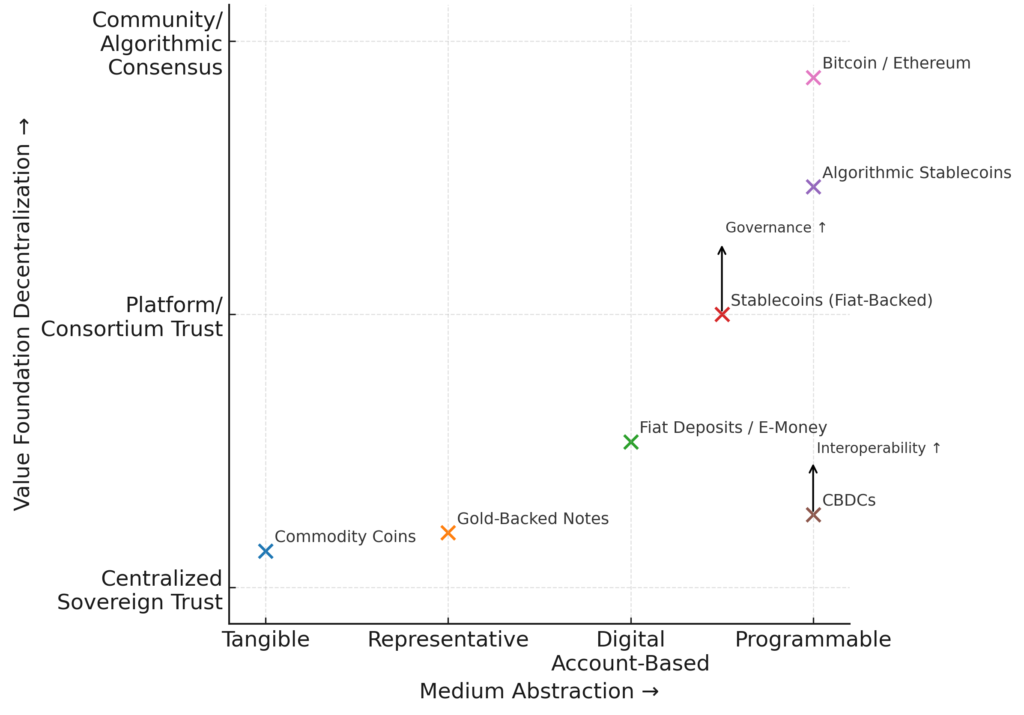
Figure 1 A Student Map of Money Forms and Trust Sources
This figure would place different forms of money on two axes. The horizontal axis would move from physical to digital and programmable forms. The vertical axis would show where trust comes from, moving from government or bank-based trust to platform, community, or code-based trust.
Examples on the map could include cash, bank deposits, e-money, fiat-backed stablecoins, CBDCs, and cryptocurrencies.
This map is not a precise economic model. It is a simplified way for me to compare different forms of money by asking two questions: What form does the money take? And why do users trust it?
4. From Cash to Digital Balances
Money has gradually become less physical. Early money often used physical objects or commodities. Later, coins and paper currency became common. Paper money was easier to carry than metal, but users still had to trust the issuer.
Modern fiat money is different from commodity money because it is not trusted mainly for the material it is made of. A dollar bill does not have value because the paper itself is valuable. It has value because people trust the legal and financial system behind it.
Bank deposits made money even more abstract. Instead of holding all value as cash, people trust banks to record balances and make payments. Credit cards, debit cards, online banking, and mobile wallets continued this shift. Now many transactions happen without people touching physical money at all.
In Singapore, I noticed that electronic payments felt very normal in daily life. In New York, I saw more of a mix: cash, credit cards, Apple Pay, Venmo, and bank transfers all coexist. This made me more aware that payment habits are not only about technology. They also depend on culture, regulation, merchant acceptance, and what people around you already use.
The main pattern is clear: money has become more digital and more abstract. But every step away from physical cash requires users to trust something less visible.
5. Stablecoins, CBDCs, and Cryptocurrencies
Stablecoins, CBDCs, and cryptocurrencies are useful examples because they show how different digital money systems can earn trust in different ways.
A fiat-backed stablecoin is usually designed to maintain a stable value, often one token equal to one U.S. dollar. At first, this sounds simple. But users still need to know what supports that one-to-one promise. Are there reserves? Can users redeem the token? Who manages the reserves? Are there audits? What happens if many users want to redeem at the same time?
A central bank digital currency, or CBDC, would also be digital, but its trust source would be different. Because it would be issued by a central bank, users would likely connect it with government authority and sovereign money. In my two-axis framework, a CBDC would be highly digital, but still strongly based on centralized public trust.
A cryptocurrency such as Bitcoin works differently. It does not depend on a central bank or private issuer in the same way. Supporters may trust it because of its software rules and decentralized network. But for ordinary users, this can also be difficult to understand. If someone loses access, sends funds incorrectly, or faces volatility, the protection may be very different from using a bank or payment app.
These examples made me realize that “digital” does not automatically mean “trustworthy.” A digital system can be convenient, but trust depends on backing, rules, transparency, and user understanding.
6. FedMSB’s 2025 Discussion as a Learning Case
FedMSB’s 2025 discussion about redefining money for the digital age helped me think about money beyond its physical form. The discussion emphasized that money in a digital environment should be considered not only by what it looks like, but also by its ability to settle value and by the governance system behind it.
For me, the most useful part was the idea that governance matters. In simple terms, governance means who makes decisions, what rules apply, and what happens when there is a problem. This is especially important for digital money because users may not see the system behind the interface.
When I worked on stablecoin-related visual identity concepts, I began to think about why certain symbols feel trustworthy. A dollar sign, the Statue of Liberty, a seal-like structure, or a clean transaction mark can all suggest stability or authority. But visual design cannot create trust by itself. If the reserves, rules, and protections are weak, the design is only surface-level.
This helped me connect design with finance. A stablecoin or digital payment product needs both real trust mechanisms and clear communication. Users need to understand what they are using. They need to know whether the product is backed by a bank, a company, a government, a protocol, or some mix of these.
That is why I see trust as something that has to be built in several layers: legal trust, operational trust, technical trust, and user-facing design trust.
7. Why This Matters for Young Users
For many Gen Z users, digital payments feel natural. People use Venmo to split food costs, Apple Pay for convenience, and online subscriptions without thinking about payment rails or settlement. The product works, so people trust it.
But from my observations, young users often trust digital payment tools for practical reasons rather than technical reasons. They trust a service because their friends use it, their parents allow it, the brand is familiar, or the app interface feels safe. This does not mean they fully understand the product.
That creates a challenge for fintech companies. If a product is too complicated, users may avoid it. If it is too simple on the surface, users may not understand the risks. Good fintech design should make financial tools easier to use without hiding important information.
For example, a payment app should make it clear what kind of balance a user is holding. A stablecoin product should explain how value is maintained. A digital wallet should communicate security and recovery options clearly. These details may seem small, but they affect whether users feel comfortable using the product.
This is one reason I became interested in the connection between financial technology and user experience. In fintech, design is not just decoration. It can shape how people understand risk, reliability, and trust.
8. Designed Trust in Digital Finance
One of my main takeaways is that trust in digital finance is partly designed.
Physical money has visible trust signals. A dollar bill has official symbols, serial numbers, signatures, and familiar design elements. People may not think about them every time they use cash, but those details help communicate authority.
Digital money has fewer physical signals. A user may only see a number, a button, a logo, or a confirmation screen. Because of that, the interface becomes more important. Words, icons, verification marks, transaction histories, warnings, and support options all influence how users understand the product.
This connects to stablecoin visual identity. A stablecoin is not only a technical or financial object. It also has to communicate what it represents. If it is connected to dollar value, users need to feel that connection clearly. If it claims stability, the product experience should explain where that stability comes from.
Of course, design cannot replace real financial safeguards. A good-looking product is not enough. But poor design can weaken trust even when the system behind the product is strong. Users may hesitate if they do not understand what they are seeing.
This is why I think the future of digital payments will depend on both strong systems and clear communication.
9. Conclusion
Money has changed from physical objects to digital and programmable systems. But the deeper change is about trust.
Cash depends on government authority and public acceptance. Bank deposits depend on regulated financial institutions. Payment apps depend on platforms, banks, and user familiarity. Stablecoins depend on issuers, reserves, redemption rules, and sometimes blockchain infrastructure. Cryptocurrencies depend more on protocols and network participation.
The two-axis framework in this essay helped me organize these differences. One axis asks how physical or digital the money is. The other asks where trust comes from. Together, they show why digital money is not just a technology question.
My conclusion is that digital money must earn user trust. It must be reliable behind the scenes and understandable on the screen. For young users especially, the interface may be the first place where trust is formed.
This is why I am interested in business, fintech, and user experience together. Digital financial tools are not only about moving money faster. They are also about helping people understand what they are using, why it works, and why they can trust it.
References
- Adrian, T., & Mancini-Griffoli, T. (2019). The rise of digital money. International Monetary Fund.
- Bank for International Settlements. (2017). Central bank cryptocurrencies. BIS Quarterly Review.
- FedMSB. (2025). FedMSB releases proposal to redefine money for the digital age.
- Gorton, G. B., & Zhang, J. Y. (2021). Taming wildcat stablecoins.
- Keynes, J. M. (1930). A treatise on money. Macmillan.
- Nakamoto, S. (2008). Bitcoin: A peer-to-peer electronic cash system.
- Narayanan, A., Bonneau, J., Felten, E. W., Miller, A., & Goldfeder, S. (2016). Bitcoin and cryptocurrency technologies: A comprehensive introduction. Princeton University Press.
- Smith, A. (1776). An inquiry into the nature and causes of the wealth of nations.
A PDF format is available for download here: